
Corporate India is busy restructuring - through mergers, demergers and splits. That seems to be the new normal as CXOs and boards brainstorm on how to create assets and value. The pitch rose significantly during the third quarter of this financial year (FY24), translating into $32.9-billion worth of such deals - the highest quarterly total since the HDFC Bank-HDFC merger announced in FY22 Q2.

'IT companies do not have a large presence there either in terms of market and team. So, the impact of the war will be minimal. But West Asia is an emerging economy.'
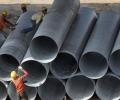
Strong demand in the domestic market, coupled with an increase in raw material prices, is pushing up steel prices. According to SteelMint, a market intelligence and price reporting firm, the list price of flat steel has seen an increase of Rs 750-2,000 per tonne for October deliveries. The long steel price witnessed an increase of Rs 1,500 per tonne towards the end of September.
The festive season will mean business for the steel industry as it is the time when automotive and consumer appliance companies bump up demand to prepare for higher sales, experts have said. Ranjan Dhar, chief marketing officer at ArcelorMittal Nippon Steel India (AM/NS India), said that bookings by auto and consumer appliance industries are 20 per cent higher ahead of the festive season compared to last year. "While this could be for a couple of months, it could normalise later at approximately 10 per cent," he said.

In the coming months, globally as well as in India, rice might remain a hot potato.

Eveready Industries India will launch a new category in Financial Year 2024-25 (FY25) as it works to double revenue, said a senior executive of the country's largest dry cell battery maker. It could be an adjacency or a new product under the Eveready brand and a final decision is expected by the end of this financial year. "We are currently working on that exercise; it's on the drawing board," said Suvamoy Saha, managing director of Eveready.
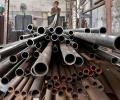
Worried by a spike in Chinese imports, the Indian Steel Association (ISA) plans to take up the matter with the government and seek measures to fix "trade distortions". Alok Sahay, secretary general of the group that represents the country's steel producers, said systemic changes were needed. "In order to take any trade measure, it takes a minimum of 15 months' time, due to prevalence of lesser duty rule in India, making India an easy target. "We are going to write to the government on this," he said.
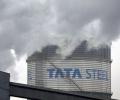
Tata Steel has built an iron ore chest of nearly 600 million tonnes (mt) and will look for more as it prepares for life beyond 2030 when its legacy captive mines come up for auction. The lease for four of its existing iron ore mines -- Joda East, Noamundi, Katamati, and Khondbond -- that feed the domestic operation with low-cost iron ore is going to expire in 2030, following changes in mining regulations. The year will also coincide with Tata Steel's ambitious target of doubling steelmaking capacity in India to 40 mt, increasing the need for iron ore. The company is pushing the pedal to ensure that it has enough resources to meet enhanced needs.

'As Tata Steel we will obviously use group-level leverage to make progress where we want.'

'While lower steel prices may impact a part of the quarter, this will be offset by softer raw material prices.'
On June 30, mining and metals giant Vedanta, announced that it had decided to initiate a strategic review of its steel and steel-making raw material businesses. The review would begin immediately and evaluate a broad range of options, including but not limited to a potential strategic sale of some or all of the steel businesses, the company said in its stock exchange filing. The signs have been there - approaches had been made to steel players over the past year. Last December, Anil Agarwal, chairman Vedanta group, told Business Standard that the steel plant capacity was about 3 million tonnes (mt).

Kolkata trams -- now in their 150th year -- are the last to survive modernity in Indian cities, writes Ishita Ayan Dutt.

The tea industry's cup of woes brimmeth - scanty rainfall and pest attacks have dragged down production in May, prices are lower than last year, and demand from some export markets is muted. Production in North Bengal - comprising the Dooars, Terai, and Darjeeling - is majorly affected; parts of Assam are also hit. Arijit Raha, secretary general, Indian Tea Association (ITA), said that the Tea Board numbers for April show a crop loss of about 9 per cent for North Bengal, compared to last year.

'We need to find out whether any structural element has got fatigue.' 'We want to increase the lifespan of the bridge.'

'It's an open secret that the UK business is structurally not in a great place.'

A hotel in 1975, entry into paperboards in 1979, India's dominant cigarette maker, ITC, read the tea - or tobacco - leaves early, leveraged its enterprise strengths and stepped up the diversification agenda to create multiple drivers of growth. Some failed, some faltered, some were transformational, adding steadily to the top line. Now those efforts are making a difference: margins from non-cigarettes - FMCG, hotels, agri, paperboards, paper and packaging - are expanding and profits are kicking in more significantly than ever before.

Packaged tea consumption in India has been under pressure due to inflation across the consumption basket coupled with higher tea prices. This is forcing tea drinkers to downtrade, especially in rural areas. Milk prices have also gone up and this has impacted tea consumption along with delayed winters in the north, companies have said. NIQ (formerly known as NielsenIQ) data shows that the packaged tea category grew around 4 per cent in value and volume terms in 2022 compared to 2021.

Disney-Star is positioning IPL as a "big-screen experience" where families and friends can come together over a game of cricket, much the way football is consumed in Europe and other parts of the world.

The March quarter (Q4) of the ongoing financial year (FY23) may see cement companies report better financial numbers as input costs ease, pricing action resumes, and cement demand remains firm. While companies have been cautiously optimistic about their outlook, analysts and sector experts remain bullish. In its latest report on the cement sector, brokerage IDBI Capital said that it expected earnings before interest, tax, depreciation, and amortisation (Ebitda) per tonne for cement companies to improve by Rs 200-300 sequentially in Q4.

'For the politics of patronage in West Bengal, it has always been important to have territorial control.'
 © 2026 Rediff.com - Investor Information - Advertise with us - Disclaimer - Privacy Policy - Sitemap - Feedback - About us - Terms of use - Grievances